
Why I Built a UX Audit Tool
Simplicity as a UX Principle

Why I Built a UX Audit Tool
Digital Insights by
Digital Consultant
Why I built a simple UX audit tool. Clarity, plain language, and how easy-to-understand UX reports drive better engagement.
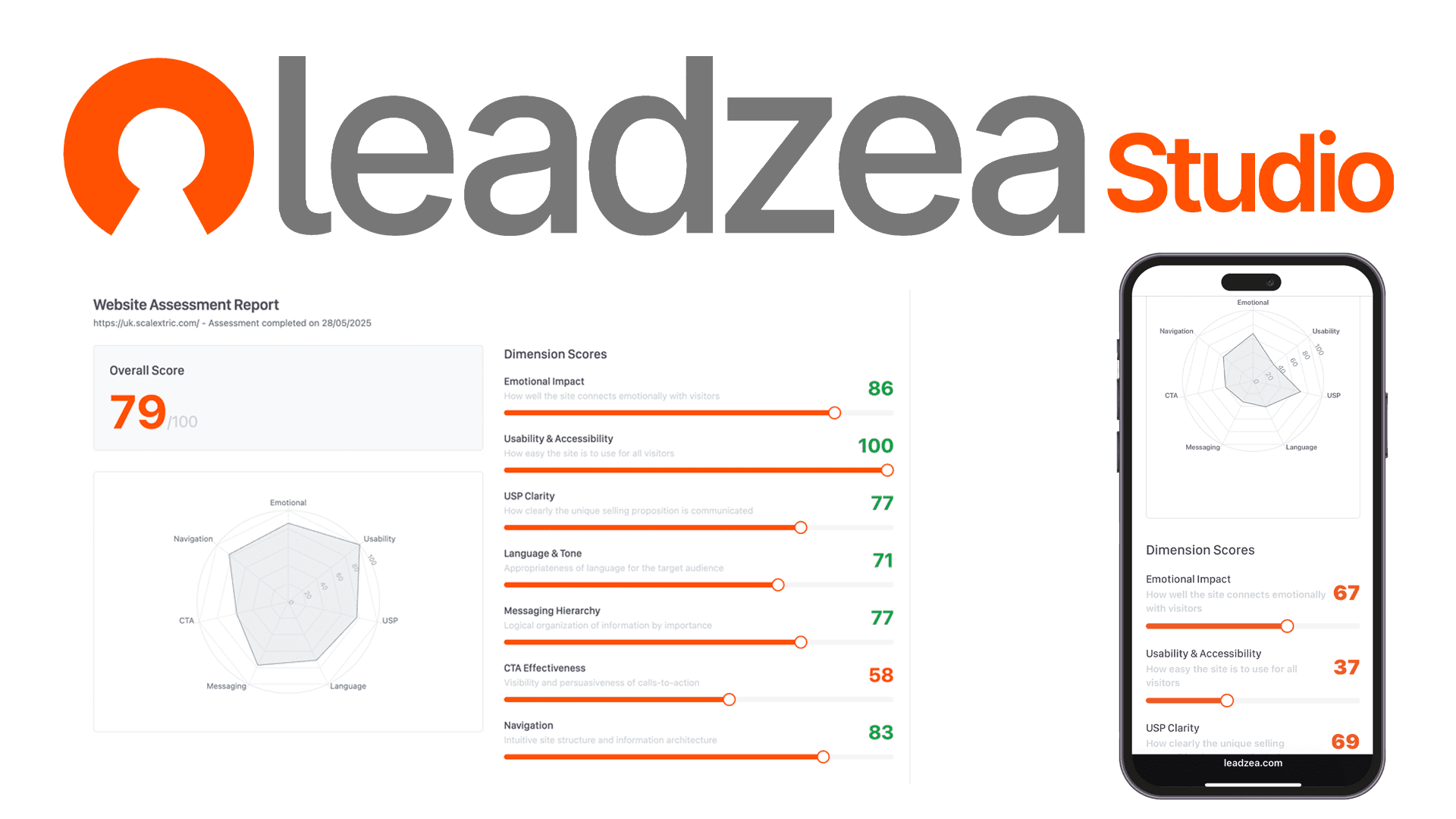
As a digital consultant, I’ve spent years working with clients and prospects who all want the same thing, even if they don’t say it explicitly:
Clarity.
Clarity about what’s working. Clarity about what’s broken. And clarity about what to do next.
Along the way, I noticed a recurring problem in the UX and digital consulting space. The more complex and technical the language became, the less useful it was to the people it was meant to help.
That’s where a simple principle comes in.
KISS – Keep It Simple, Stupid.
It’s not polite. It’s not trendy. But it works.
The UX Industry’s Love Affair With Complexity
In digital consulting and UX, there’s a belief that expertise should sound complicated. Audits are filled with dense terminology, abstract frameworks, and impressive-sounding phrases that look good on paper but often confuse clients.
The problem is that clients and prospects aren’t buying jargon. They’re buying understanding.
If someone has to decode a UX audit to understand what’s wrong with their website, the audit has already failed.
Users don’t think in technical terms. They think:
Why can’t I find what I’m looking for?
Why does this feel hard?
Why don’t I trust this?
At the same time, website and digital product owners are asking a different—but closely related—set of questions:
Why is my bounce rate so high?
Why am I not getting conversions or leads?
I have a good product or service – is my message actually clear?
These questions are two sides of the same problem.
If UX insights can’t be explained in language that mirrors how users actually think and answers what business owners actually care about, they’re not doing their job.
Why Simplicity Matters When Working With Clients and Prospects
When you’re dealing with clients and prospects, simplicity isn’t optional—it’s paramount.
Clear, understandable language builds trust. It speeds up decision-making. It removes friction from conversations and gets everyone aligned faster.
I’ve seen too many good recommendations stall simply because they were wrapped in overly technical explanations. Not because the ideas were wrong, but because they weren’t accessible.
Simplicity turns insight into action.
Why Simplicity Wins in Prospect Conversations
Let’s be honest: most introductory emails from web designers and creative professionals are painfully easy to ignore.
They’re full of polite fluff, vague claims, and buzzwords about being “data-driven”, “user-centric”, or “end-to-end”. They ask for 30 minutes of someone’s time without giving a clear reason why.
From a prospect’s point of view, they all sound the same.
That’s often because designers and creatives naturally focus on their craft—their visual style, creativity, and execution skills. While those things matter, they’re rarely what convinces a business owner to respond.
A simple UX report shifts the conversation away from how good the work looks to how well it works.
That shift is what moves you from being seen as a vendor to being trusted as an advisor.
When a prospect can clearly see where users are getting stuck, why conversions are suffering, and how clarity can improve results, the conversation changes. You’re no longer pitching design services—you’re helping them understand their business.
And when you lead with insight, it becomes much easier to justify your fees. You’re not pricing creativity alone; you’re pricing problem‑solving, clarity, and outcomes.
That’s exactly why sending an easy-to-understand Leadzea UX Report is such a powerful alternative.
Instead of another generic intro email, you’re leading with relevance.
Rather than saying what you do, you’re showing that you already understand their website, their users, and their problems.
Why a Leadzea UX Report Beats a Sales Email
A simple, clearly written UX report does what a traditional introductory email can’t:
It immediately answers “What’s wrong with my site?”
It connects user frustration to business metrics like bounce rate and conversions
It demonstrates expertise without needing to explain it
It gives prospects value before they’ve replied to a single message
There’s no jargon to decode and no abstract theory to interpret. The prospect doesn’t need to believe you—they can see the issues for themselves.
That kind of clarity builds trust fast.
A Real-World Prospect Scenario
Imagine opening an email that says:
“I took a quick look at your website and noticed a few areas where users may be dropping off. I’ve put together a short UX report that highlights what’s causing confusion and what you could improve.”
Now imagine clicking through and seeing:
A single page summary
Plain-language explanations
Issues you’ve already suspected but couldn’t quite articulate
At that point, the conversation has already changed.
You’re no longer asking for a call to explain who you are. You’re being asked for a call because you’ve already helped.
Selling Without Selling
This simple UX audit–led approach to outreach has worked exceptionally well for me.
Instead of opening conversations with a pitch, I opened them with clarity. Prospects immediately recognised the issues highlighted in the report, saw their own concerns reflected back at them, and understood the value before we ever spoke.
Those conversations were easier, faster, and more productive. There was less convincing and more collaborating.
That real‑world success is exactly why I built Leadzea.
I originally created Leadzea for myself, simply to make the UX audit and report creation process quicker and more efficient.
Once I started using it, I realised how useful and effective it was—not just for saving time, but for improving the quality of conversations I was having with prospects and clients.
That’s when it became clear it shouldn’t just be my tool. I wanted to share a simple, repeatable way for designers, creatives, and consultants to elevate their positioning, lead with value, and start better conversations—without hiding behind jargon or lengthy explanations.
A Leadzea UX Report turns outreach into insight. It removes friction from the sales process and replaces it with clarity.
You’re not chasing attention—you’re earning it.
And because the report is simple and understandable, it gets read. It gets shared internally. It creates momentum.
That’s a far bigger win than any perfectly worded introductory email.
Why I Created Leadzea
I created Leadzea to be a simple tool that supports this philosophy.
Leadzea was built to meet one core objective: make UX insights easy to understand and easy to act on.
The Leadzea UX Audit isn’t designed to impress with how much theory it contains. It’s designed to help clients quickly see:
What users are experiencing
Where confusion or friction exists
How those issues affect trust and conversion
What changes will make the biggest impact
No unnecessary jargon. No bloated explanations. Just clear, practical insight.
A UX Audit That Respects Attention
Good UX respects users’ time. A good UX audit tool should do the same for clients.
With Leadzea, the focus is on:
Plain language findings
Clear priorities
Actionable recommendations
If something doesn’t materially improve the user experience or business outcome, it doesn’t belong in the audit.
Simplicity Is a Sign of Real Expertise
Simplicity isn’t about dumbing things down. It’s about understanding things deeply enough to explain them clearly.
Anyone can make UX sound complicated. It takes real expertise to strip it back to what actually matters.
That’s the approach I bring as a digital consultant, and it’s the philosophy behind Leadzea.
Who Leadzea Is For
Leadzea is built for people who value clarity over complexity and want UX insight they can actually use.
Web Designers & Creative Professionals
For designers and creatives who are tired of being judged purely on aesthetics, Leadzea helps you lead with insight. Read my article on how I use UX Reports to Get More Web Design Clients.
It allows you to:
Elevate your positioning from maker to advisor
Start conversations with value, not visuals alone
Clearly explain why a design change matters
Justify fees based on outcomes, not taste
Digital Consultants & Freelancers
If you sell strategy, optimisation, or growth, Leadzea gives you a simple, repeatable way to uncover and communicate UX issues.
You can:
Run fast, effective UX audits
Present findings in plain language clients understand
Focus conversations on what actually moves the needle
Avoid overloading clients with theory or jargon
Marketing Teams
Leadzea is also designed for in-house marketing teams who need focus and alignment.
It provides an effective framework for UX audits and user testing by:
Asking the right questions about user behaviour
Anchoring insight to proven, easy-to-understand metrics
Connecting UX issues to conversion, engagement, and drop-off
Helping teams prioritise changes with confidence
Instead of guessing or debating opinions, teams can rally around clear evidence and shared understanding.
The Takeaway
The best user experiences feel effortless.
The best client conversations do too.
Leadzea exists because simplicity creates clarity, clarity creates confidence, and confidence drives action.
KISS isn’t just a saying. It’s how I work—and why Leadzea works.
Why I Built a UX Audit Tool
Simplicity as a UX Principle
Why I Built a UX Audit Tool
Digital Insights by
Digital Consultant
Why I built a simple UX audit tool. Clarity, plain language, and how easy-to-understand UX reports drive better engagement.
As a digital consultant, I’ve spent years working with clients and prospects who all want the same thing, even if they don’t say it explicitly:
Clarity.
Clarity about what’s working. Clarity about what’s broken. And clarity about what to do next.
Along the way, I noticed a recurring problem in the UX and digital consulting space. The more complex and technical the language became, the less useful it was to the people it was meant to help.
That’s where a simple principle comes in.
KISS – Keep It Simple, Stupid.
It’s not polite. It’s not trendy. But it works.
The UX Industry’s Love Affair With Complexity
In digital consulting and UX, there’s a belief that expertise should sound complicated. Audits are filled with dense terminology, abstract frameworks, and impressive-sounding phrases that look good on paper but often confuse clients.
The problem is that clients and prospects aren’t buying jargon. They’re buying understanding.
If someone has to decode a UX audit to understand what’s wrong with their website, the audit has already failed.
Users don’t think in technical terms. They think:
Why can’t I find what I’m looking for?
Why does this feel hard?
Why don’t I trust this?
At the same time, website and digital product owners are asking a different—but closely related—set of questions:
Why is my bounce rate so high?
Why am I not getting conversions or leads?
I have a good product or service – is my message actually clear?
These questions are two sides of the same problem.
If UX insights can’t be explained in language that mirrors how users actually think and answers what business owners actually care about, they’re not doing their job.
Why Simplicity Matters When Working With Clients and Prospects
When you’re dealing with clients and prospects, simplicity isn’t optional—it’s paramount.
Clear, understandable language builds trust. It speeds up decision-making. It removes friction from conversations and gets everyone aligned faster.
I’ve seen too many good recommendations stall simply because they were wrapped in overly technical explanations. Not because the ideas were wrong, but because they weren’t accessible.
Simplicity turns insight into action.
Why Simplicity Wins in Prospect Conversations
Let’s be honest: most introductory emails from web designers and creative professionals are painfully easy to ignore.
They’re full of polite fluff, vague claims, and buzzwords about being “data-driven”, “user-centric”, or “end-to-end”. They ask for 30 minutes of someone’s time without giving a clear reason why.
From a prospect’s point of view, they all sound the same.
That’s often because designers and creatives naturally focus on their craft—their visual style, creativity, and execution skills. While those things matter, they’re rarely what convinces a business owner to respond.
A simple UX report shifts the conversation away from how good the work looks to how well it works.
That shift is what moves you from being seen as a vendor to being trusted as an advisor.
When a prospect can clearly see where users are getting stuck, why conversions are suffering, and how clarity can improve results, the conversation changes. You’re no longer pitching design services—you’re helping them understand their business.
And when you lead with insight, it becomes much easier to justify your fees. You’re not pricing creativity alone; you’re pricing problem‑solving, clarity, and outcomes.
That’s exactly why sending an easy-to-understand Leadzea UX Report is such a powerful alternative.
Instead of another generic intro email, you’re leading with relevance.
Rather than saying what you do, you’re showing that you already understand their website, their users, and their problems.
Why a Leadzea UX Report Beats a Sales Email
A simple, clearly written UX report does what a traditional introductory email can’t:
It immediately answers “What’s wrong with my site?”
It connects user frustration to business metrics like bounce rate and conversions
It demonstrates expertise without needing to explain it
It gives prospects value before they’ve replied to a single message
There’s no jargon to decode and no abstract theory to interpret. The prospect doesn’t need to believe you—they can see the issues for themselves.
That kind of clarity builds trust fast.
A Real-World Prospect Scenario
Imagine opening an email that says:
“I took a quick look at your website and noticed a few areas where users may be dropping off. I’ve put together a short UX report that highlights what’s causing confusion and what you could improve.”
Now imagine clicking through and seeing:
A single page summary
Plain-language explanations
Issues you’ve already suspected but couldn’t quite articulate
At that point, the conversation has already changed.
You’re no longer asking for a call to explain who you are. You’re being asked for a call because you’ve already helped.
Selling Without Selling
This simple UX audit–led approach to outreach has worked exceptionally well for me.
Instead of opening conversations with a pitch, I opened them with clarity. Prospects immediately recognised the issues highlighted in the report, saw their own concerns reflected back at them, and understood the value before we ever spoke.
Those conversations were easier, faster, and more productive. There was less convincing and more collaborating.
That real‑world success is exactly why I built Leadzea.
I originally created Leadzea for myself, simply to make the UX audit and report creation process quicker and more efficient.
Once I started using it, I realised how useful and effective it was—not just for saving time, but for improving the quality of conversations I was having with prospects and clients.
That’s when it became clear it shouldn’t just be my tool. I wanted to share a simple, repeatable way for designers, creatives, and consultants to elevate their positioning, lead with value, and start better conversations—without hiding behind jargon or lengthy explanations.
A Leadzea UX Report turns outreach into insight. It removes friction from the sales process and replaces it with clarity.
You’re not chasing attention—you’re earning it.
And because the report is simple and understandable, it gets read. It gets shared internally. It creates momentum.
That’s a far bigger win than any perfectly worded introductory email.
Why I Created Leadzea
I created Leadzea to be a simple tool that supports this philosophy.
Leadzea was built to meet one core objective: make UX insights easy to understand and easy to act on.
The Leadzea UX Audit isn’t designed to impress with how much theory it contains. It’s designed to help clients quickly see:
What users are experiencing
Where confusion or friction exists
How those issues affect trust and conversion
What changes will make the biggest impact
No unnecessary jargon. No bloated explanations. Just clear, practical insight.
A UX Audit That Respects Attention
Good UX respects users’ time. A good UX audit tool should do the same for clients.
With Leadzea, the focus is on:
Plain language findings
Clear priorities
Actionable recommendations
If something doesn’t materially improve the user experience or business outcome, it doesn’t belong in the audit.
Simplicity Is a Sign of Real Expertise
Simplicity isn’t about dumbing things down. It’s about understanding things deeply enough to explain them clearly.
Anyone can make UX sound complicated. It takes real expertise to strip it back to what actually matters.
That’s the approach I bring as a digital consultant, and it’s the philosophy behind Leadzea.
Who Leadzea Is For
Leadzea is built for people who value clarity over complexity and want UX insight they can actually use.
Web Designers & Creative Professionals
For designers and creatives who are tired of being judged purely on aesthetics, Leadzea helps you lead with insight. Read my article on how I use UX Reports to Get More Web Design Clients.
It allows you to:
Elevate your positioning from maker to advisor
Start conversations with value, not visuals alone
Clearly explain why a design change matters
Justify fees based on outcomes, not taste
Digital Consultants & Freelancers
If you sell strategy, optimisation, or growth, Leadzea gives you a simple, repeatable way to uncover and communicate UX issues.
You can:
Run fast, effective UX audits
Present findings in plain language clients understand
Focus conversations on what actually moves the needle
Avoid overloading clients with theory or jargon
Marketing Teams
Leadzea is also designed for in-house marketing teams who need focus and alignment.
It provides an effective framework for UX audits and user testing by:
Asking the right questions about user behaviour
Anchoring insight to proven, easy-to-understand metrics
Connecting UX issues to conversion, engagement, and drop-off
Helping teams prioritise changes with confidence
Instead of guessing or debating opinions, teams can rally around clear evidence and shared understanding.
The Takeaway
The best user experiences feel effortless.
The best client conversations do too.
Leadzea exists because simplicity creates clarity, clarity creates confidence, and confidence drives action.
KISS isn’t just a saying. It’s how I work—and why Leadzea works.
Why I Built a UX Audit Tool
Simplicity as a UX Principle
Why I Built a UX Audit Tool
Digital Insights by
Digital Consultant
Why I built a simple UX audit tool. Clarity, plain language, and how easy-to-understand UX reports drive better engagement.
As a digital consultant, I’ve spent years working with clients and prospects who all want the same thing, even if they don’t say it explicitly:
Clarity.
Clarity about what’s working. Clarity about what’s broken. And clarity about what to do next.
Along the way, I noticed a recurring problem in the UX and digital consulting space. The more complex and technical the language became, the less useful it was to the people it was meant to help.
That’s where a simple principle comes in.
KISS – Keep It Simple, Stupid.
It’s not polite. It’s not trendy. But it works.
The UX Industry’s Love Affair With Complexity
In digital consulting and UX, there’s a belief that expertise should sound complicated. Audits are filled with dense terminology, abstract frameworks, and impressive-sounding phrases that look good on paper but often confuse clients.
The problem is that clients and prospects aren’t buying jargon. They’re buying understanding.
If someone has to decode a UX audit to understand what’s wrong with their website, the audit has already failed.
Users don’t think in technical terms. They think:
Why can’t I find what I’m looking for?
Why does this feel hard?
Why don’t I trust this?
At the same time, website and digital product owners are asking a different—but closely related—set of questions:
Why is my bounce rate so high?
Why am I not getting conversions or leads?
I have a good product or service – is my message actually clear?
These questions are two sides of the same problem.
If UX insights can’t be explained in language that mirrors how users actually think and answers what business owners actually care about, they’re not doing their job.
Why Simplicity Matters When Working With Clients and Prospects
When you’re dealing with clients and prospects, simplicity isn’t optional—it’s paramount.
Clear, understandable language builds trust. It speeds up decision-making. It removes friction from conversations and gets everyone aligned faster.
I’ve seen too many good recommendations stall simply because they were wrapped in overly technical explanations. Not because the ideas were wrong, but because they weren’t accessible.
Simplicity turns insight into action.
Why Simplicity Wins in Prospect Conversations
Let’s be honest: most introductory emails from web designers and creative professionals are painfully easy to ignore.
They’re full of polite fluff, vague claims, and buzzwords about being “data-driven”, “user-centric”, or “end-to-end”. They ask for 30 minutes of someone’s time without giving a clear reason why.
From a prospect’s point of view, they all sound the same.
That’s often because designers and creatives naturally focus on their craft—their visual style, creativity, and execution skills. While those things matter, they’re rarely what convinces a business owner to respond.
A simple UX report shifts the conversation away from how good the work looks to how well it works.
That shift is what moves you from being seen as a vendor to being trusted as an advisor.
When a prospect can clearly see where users are getting stuck, why conversions are suffering, and how clarity can improve results, the conversation changes. You’re no longer pitching design services—you’re helping them understand their business.
And when you lead with insight, it becomes much easier to justify your fees. You’re not pricing creativity alone; you’re pricing problem‑solving, clarity, and outcomes.
That’s exactly why sending an easy-to-understand Leadzea UX Report is such a powerful alternative.
Instead of another generic intro email, you’re leading with relevance.
Rather than saying what you do, you’re showing that you already understand their website, their users, and their problems.
Why a Leadzea UX Report Beats a Sales Email
A simple, clearly written UX report does what a traditional introductory email can’t:
It immediately answers “What’s wrong with my site?”
It connects user frustration to business metrics like bounce rate and conversions
It demonstrates expertise without needing to explain it
It gives prospects value before they’ve replied to a single message
There’s no jargon to decode and no abstract theory to interpret. The prospect doesn’t need to believe you—they can see the issues for themselves.
That kind of clarity builds trust fast.
A Real-World Prospect Scenario
Imagine opening an email that says:
“I took a quick look at your website and noticed a few areas where users may be dropping off. I’ve put together a short UX report that highlights what’s causing confusion and what you could improve.”
Now imagine clicking through and seeing:
A single page summary
Plain-language explanations
Issues you’ve already suspected but couldn’t quite articulate
At that point, the conversation has already changed.
You’re no longer asking for a call to explain who you are. You’re being asked for a call because you’ve already helped.
Selling Without Selling
This simple UX audit–led approach to outreach has worked exceptionally well for me.
Instead of opening conversations with a pitch, I opened them with clarity. Prospects immediately recognised the issues highlighted in the report, saw their own concerns reflected back at them, and understood the value before we ever spoke.
Those conversations were easier, faster, and more productive. There was less convincing and more collaborating.
That real‑world success is exactly why I built Leadzea.
I originally created Leadzea for myself, simply to make the UX audit and report creation process quicker and more efficient.
Once I started using it, I realised how useful and effective it was—not just for saving time, but for improving the quality of conversations I was having with prospects and clients.
That’s when it became clear it shouldn’t just be my tool. I wanted to share a simple, repeatable way for designers, creatives, and consultants to elevate their positioning, lead with value, and start better conversations—without hiding behind jargon or lengthy explanations.
A Leadzea UX Report turns outreach into insight. It removes friction from the sales process and replaces it with clarity.
You’re not chasing attention—you’re earning it.
And because the report is simple and understandable, it gets read. It gets shared internally. It creates momentum.
That’s a far bigger win than any perfectly worded introductory email.
Why I Created Leadzea
I created Leadzea to be a simple tool that supports this philosophy.
Leadzea was built to meet one core objective: make UX insights easy to understand and easy to act on.
The Leadzea UX Audit isn’t designed to impress with how much theory it contains. It’s designed to help clients quickly see:
What users are experiencing
Where confusion or friction exists
How those issues affect trust and conversion
What changes will make the biggest impact
No unnecessary jargon. No bloated explanations. Just clear, practical insight.
A UX Audit That Respects Attention
Good UX respects users’ time. A good UX audit tool should do the same for clients.
With Leadzea, the focus is on:
Plain language findings
Clear priorities
Actionable recommendations
If something doesn’t materially improve the user experience or business outcome, it doesn’t belong in the audit.
Simplicity Is a Sign of Real Expertise
Simplicity isn’t about dumbing things down. It’s about understanding things deeply enough to explain them clearly.
Anyone can make UX sound complicated. It takes real expertise to strip it back to what actually matters.
That’s the approach I bring as a digital consultant, and it’s the philosophy behind Leadzea.
Who Leadzea Is For
Leadzea is built for people who value clarity over complexity and want UX insight they can actually use.
Web Designers & Creative Professionals
For designers and creatives who are tired of being judged purely on aesthetics, Leadzea helps you lead with insight. Read my article on how I use UX Reports to Get More Web Design Clients.
It allows you to:
Elevate your positioning from maker to advisor
Start conversations with value, not visuals alone
Clearly explain why a design change matters
Justify fees based on outcomes, not taste
Digital Consultants & Freelancers
If you sell strategy, optimisation, or growth, Leadzea gives you a simple, repeatable way to uncover and communicate UX issues.
You can:
Run fast, effective UX audits
Present findings in plain language clients understand
Focus conversations on what actually moves the needle
Avoid overloading clients with theory or jargon
Marketing Teams
Leadzea is also designed for in-house marketing teams who need focus and alignment.
It provides an effective framework for UX audits and user testing by:
Asking the right questions about user behaviour
Anchoring insight to proven, easy-to-understand metrics
Connecting UX issues to conversion, engagement, and drop-off
Helping teams prioritise changes with confidence
Instead of guessing or debating opinions, teams can rally around clear evidence and shared understanding.
The Takeaway
The best user experiences feel effortless.
The best client conversations do too.
Leadzea exists because simplicity creates clarity, clarity creates confidence, and confidence drives action.
KISS isn’t just a saying. It’s how I work—and why Leadzea works.

Transforming brands
my team - your team
Learn the benefits by booking a consultation with your Digital Transformation Consultant
The start of great things.

Why I Built a UX Audit Tool
Simplicity as a UX Principle
Why I Built a UX Audit Tool
Digital Insights by
Digital Consultant
Why I built a simple UX audit tool. Clarity, plain language, and how easy-to-understand UX reports drive better engagement.
As a digital consultant, I’ve spent years working with clients and prospects who all want the same thing, even if they don’t say it explicitly:
Clarity.
Clarity about what’s working. Clarity about what’s broken. And clarity about what to do next.
Along the way, I noticed a recurring problem in the UX and digital consulting space. The more complex and technical the language became, the less useful it was to the people it was meant to help.
That’s where a simple principle comes in.
KISS – Keep It Simple, Stupid.
It’s not polite. It’s not trendy. But it works.
The UX Industry’s Love Affair With Complexity
In digital consulting and UX, there’s a belief that expertise should sound complicated. Audits are filled with dense terminology, abstract frameworks, and impressive-sounding phrases that look good on paper but often confuse clients.
The problem is that clients and prospects aren’t buying jargon. They’re buying understanding.
If someone has to decode a UX audit to understand what’s wrong with their website, the audit has already failed.
Users don’t think in technical terms. They think:
Why can’t I find what I’m looking for?
Why does this feel hard?
Why don’t I trust this?
At the same time, website and digital product owners are asking a different—but closely related—set of questions:
Why is my bounce rate so high?
Why am I not getting conversions or leads?
I have a good product or service – is my message actually clear?
These questions are two sides of the same problem.
If UX insights can’t be explained in language that mirrors how users actually think and answers what business owners actually care about, they’re not doing their job.
Why Simplicity Matters When Working With Clients and Prospects
When you’re dealing with clients and prospects, simplicity isn’t optional—it’s paramount.
Clear, understandable language builds trust. It speeds up decision-making. It removes friction from conversations and gets everyone aligned faster.
I’ve seen too many good recommendations stall simply because they were wrapped in overly technical explanations. Not because the ideas were wrong, but because they weren’t accessible.
Simplicity turns insight into action.
Why Simplicity Wins in Prospect Conversations
Let’s be honest: most introductory emails from web designers and creative professionals are painfully easy to ignore.
They’re full of polite fluff, vague claims, and buzzwords about being “data-driven”, “user-centric”, or “end-to-end”. They ask for 30 minutes of someone’s time without giving a clear reason why.
From a prospect’s point of view, they all sound the same.
That’s often because designers and creatives naturally focus on their craft—their visual style, creativity, and execution skills. While those things matter, they’re rarely what convinces a business owner to respond.
A simple UX report shifts the conversation away from how good the work looks to how well it works.
That shift is what moves you from being seen as a vendor to being trusted as an advisor.
When a prospect can clearly see where users are getting stuck, why conversions are suffering, and how clarity can improve results, the conversation changes. You’re no longer pitching design services—you’re helping them understand their business.
And when you lead with insight, it becomes much easier to justify your fees. You’re not pricing creativity alone; you’re pricing problem‑solving, clarity, and outcomes.
That’s exactly why sending an easy-to-understand Leadzea UX Report is such a powerful alternative.
Instead of another generic intro email, you’re leading with relevance.
Rather than saying what you do, you’re showing that you already understand their website, their users, and their problems.
Why a Leadzea UX Report Beats a Sales Email
A simple, clearly written UX report does what a traditional introductory email can’t:
It immediately answers “What’s wrong with my site?”
It connects user frustration to business metrics like bounce rate and conversions
It demonstrates expertise without needing to explain it
It gives prospects value before they’ve replied to a single message
There’s no jargon to decode and no abstract theory to interpret. The prospect doesn’t need to believe you—they can see the issues for themselves.
That kind of clarity builds trust fast.
A Real-World Prospect Scenario
Imagine opening an email that says:
“I took a quick look at your website and noticed a few areas where users may be dropping off. I’ve put together a short UX report that highlights what’s causing confusion and what you could improve.”
Now imagine clicking through and seeing:
A single page summary
Plain-language explanations
Issues you’ve already suspected but couldn’t quite articulate
At that point, the conversation has already changed.
You’re no longer asking for a call to explain who you are. You’re being asked for a call because you’ve already helped.
Selling Without Selling
This simple UX audit–led approach to outreach has worked exceptionally well for me.
Instead of opening conversations with a pitch, I opened them with clarity. Prospects immediately recognised the issues highlighted in the report, saw their own concerns reflected back at them, and understood the value before we ever spoke.
Those conversations were easier, faster, and more productive. There was less convincing and more collaborating.
That real‑world success is exactly why I built Leadzea.
I originally created Leadzea for myself, simply to make the UX audit and report creation process quicker and more efficient.
Once I started using it, I realised how useful and effective it was—not just for saving time, but for improving the quality of conversations I was having with prospects and clients.
That’s when it became clear it shouldn’t just be my tool. I wanted to share a simple, repeatable way for designers, creatives, and consultants to elevate their positioning, lead with value, and start better conversations—without hiding behind jargon or lengthy explanations.
A Leadzea UX Report turns outreach into insight. It removes friction from the sales process and replaces it with clarity.
You’re not chasing attention—you’re earning it.
And because the report is simple and understandable, it gets read. It gets shared internally. It creates momentum.
That’s a far bigger win than any perfectly worded introductory email.
Why I Created Leadzea
I created Leadzea to be a simple tool that supports this philosophy.
Leadzea was built to meet one core objective: make UX insights easy to understand and easy to act on.
The Leadzea UX Audit isn’t designed to impress with how much theory it contains. It’s designed to help clients quickly see:
What users are experiencing
Where confusion or friction exists
How those issues affect trust and conversion
What changes will make the biggest impact
No unnecessary jargon. No bloated explanations. Just clear, practical insight.
A UX Audit That Respects Attention
Good UX respects users’ time. A good UX audit tool should do the same for clients.
With Leadzea, the focus is on:
Plain language findings
Clear priorities
Actionable recommendations
If something doesn’t materially improve the user experience or business outcome, it doesn’t belong in the audit.
Simplicity Is a Sign of Real Expertise
Simplicity isn’t about dumbing things down. It’s about understanding things deeply enough to explain them clearly.
Anyone can make UX sound complicated. It takes real expertise to strip it back to what actually matters.
That’s the approach I bring as a digital consultant, and it’s the philosophy behind Leadzea.
Who Leadzea Is For
Leadzea is built for people who value clarity over complexity and want UX insight they can actually use.
Web Designers & Creative Professionals
For designers and creatives who are tired of being judged purely on aesthetics, Leadzea helps you lead with insight. Read my article on how I use UX Reports to Get More Web Design Clients.
It allows you to:
Elevate your positioning from maker to advisor
Start conversations with value, not visuals alone
Clearly explain why a design change matters
Justify fees based on outcomes, not taste
Digital Consultants & Freelancers
If you sell strategy, optimisation, or growth, Leadzea gives you a simple, repeatable way to uncover and communicate UX issues.
You can:
Run fast, effective UX audits
Present findings in plain language clients understand
Focus conversations on what actually moves the needle
Avoid overloading clients with theory or jargon
Marketing Teams
Leadzea is also designed for in-house marketing teams who need focus and alignment.
It provides an effective framework for UX audits and user testing by:
Asking the right questions about user behaviour
Anchoring insight to proven, easy-to-understand metrics
Connecting UX issues to conversion, engagement, and drop-off
Helping teams prioritise changes with confidence
Instead of guessing or debating opinions, teams can rally around clear evidence and shared understanding.
The Takeaway
The best user experiences feel effortless.
The best client conversations do too.
Leadzea exists because simplicity creates clarity, clarity creates confidence, and confidence drives action.
KISS isn’t just a saying. It’s how I work—and why Leadzea works.
Why I Built a UX Audit Tool
Simplicity as a UX Principle
Why I Built a UX Audit Tool
Digital Insights by
Digital Consultant
Why I built a simple UX audit tool. Clarity, plain language, and how easy-to-understand UX reports drive better engagement.
As a digital consultant, I’ve spent years working with clients and prospects who all want the same thing, even if they don’t say it explicitly:
Clarity.
Clarity about what’s working. Clarity about what’s broken. And clarity about what to do next.
Along the way, I noticed a recurring problem in the UX and digital consulting space. The more complex and technical the language became, the less useful it was to the people it was meant to help.
That’s where a simple principle comes in.
KISS – Keep It Simple, Stupid.
It’s not polite. It’s not trendy. But it works.
The UX Industry’s Love Affair With Complexity
In digital consulting and UX, there’s a belief that expertise should sound complicated. Audits are filled with dense terminology, abstract frameworks, and impressive-sounding phrases that look good on paper but often confuse clients.
The problem is that clients and prospects aren’t buying jargon. They’re buying understanding.
If someone has to decode a UX audit to understand what’s wrong with their website, the audit has already failed.
Users don’t think in technical terms. They think:
Why can’t I find what I’m looking for?
Why does this feel hard?
Why don’t I trust this?
At the same time, website and digital product owners are asking a different—but closely related—set of questions:
Why is my bounce rate so high?
Why am I not getting conversions or leads?
I have a good product or service – is my message actually clear?
These questions are two sides of the same problem.
If UX insights can’t be explained in language that mirrors how users actually think and answers what business owners actually care about, they’re not doing their job.
Why Simplicity Matters When Working With Clients and Prospects
When you’re dealing with clients and prospects, simplicity isn’t optional—it’s paramount.
Clear, understandable language builds trust. It speeds up decision-making. It removes friction from conversations and gets everyone aligned faster.
I’ve seen too many good recommendations stall simply because they were wrapped in overly technical explanations. Not because the ideas were wrong, but because they weren’t accessible.
Simplicity turns insight into action.
Why Simplicity Wins in Prospect Conversations
Let’s be honest: most introductory emails from web designers and creative professionals are painfully easy to ignore.
They’re full of polite fluff, vague claims, and buzzwords about being “data-driven”, “user-centric”, or “end-to-end”. They ask for 30 minutes of someone’s time without giving a clear reason why.
From a prospect’s point of view, they all sound the same.
That’s often because designers and creatives naturally focus on their craft—their visual style, creativity, and execution skills. While those things matter, they’re rarely what convinces a business owner to respond.
A simple UX report shifts the conversation away from how good the work looks to how well it works.
That shift is what moves you from being seen as a vendor to being trusted as an advisor.
When a prospect can clearly see where users are getting stuck, why conversions are suffering, and how clarity can improve results, the conversation changes. You’re no longer pitching design services—you’re helping them understand their business.
And when you lead with insight, it becomes much easier to justify your fees. You’re not pricing creativity alone; you’re pricing problem‑solving, clarity, and outcomes.
That’s exactly why sending an easy-to-understand Leadzea UX Report is such a powerful alternative.
Instead of another generic intro email, you’re leading with relevance.
Rather than saying what you do, you’re showing that you already understand their website, their users, and their problems.
Why a Leadzea UX Report Beats a Sales Email
A simple, clearly written UX report does what a traditional introductory email can’t:
It immediately answers “What’s wrong with my site?”
It connects user frustration to business metrics like bounce rate and conversions
It demonstrates expertise without needing to explain it
It gives prospects value before they’ve replied to a single message
There’s no jargon to decode and no abstract theory to interpret. The prospect doesn’t need to believe you—they can see the issues for themselves.
That kind of clarity builds trust fast.
A Real-World Prospect Scenario
Imagine opening an email that says:
“I took a quick look at your website and noticed a few areas where users may be dropping off. I’ve put together a short UX report that highlights what’s causing confusion and what you could improve.”
Now imagine clicking through and seeing:
A single page summary
Plain-language explanations
Issues you’ve already suspected but couldn’t quite articulate
At that point, the conversation has already changed.
You’re no longer asking for a call to explain who you are. You’re being asked for a call because you’ve already helped.
Selling Without Selling
This simple UX audit–led approach to outreach has worked exceptionally well for me.
Instead of opening conversations with a pitch, I opened them with clarity. Prospects immediately recognised the issues highlighted in the report, saw their own concerns reflected back at them, and understood the value before we ever spoke.
Those conversations were easier, faster, and more productive. There was less convincing and more collaborating.
That real‑world success is exactly why I built Leadzea.
I originally created Leadzea for myself, simply to make the UX audit and report creation process quicker and more efficient.
Once I started using it, I realised how useful and effective it was—not just for saving time, but for improving the quality of conversations I was having with prospects and clients.
That’s when it became clear it shouldn’t just be my tool. I wanted to share a simple, repeatable way for designers, creatives, and consultants to elevate their positioning, lead with value, and start better conversations—without hiding behind jargon or lengthy explanations.
A Leadzea UX Report turns outreach into insight. It removes friction from the sales process and replaces it with clarity.
You’re not chasing attention—you’re earning it.
And because the report is simple and understandable, it gets read. It gets shared internally. It creates momentum.
That’s a far bigger win than any perfectly worded introductory email.
Why I Created Leadzea
I created Leadzea to be a simple tool that supports this philosophy.
Leadzea was built to meet one core objective: make UX insights easy to understand and easy to act on.
The Leadzea UX Audit isn’t designed to impress with how much theory it contains. It’s designed to help clients quickly see:
What users are experiencing
Where confusion or friction exists
How those issues affect trust and conversion
What changes will make the biggest impact
No unnecessary jargon. No bloated explanations. Just clear, practical insight.
A UX Audit That Respects Attention
Good UX respects users’ time. A good UX audit tool should do the same for clients.
With Leadzea, the focus is on:
Plain language findings
Clear priorities
Actionable recommendations
If something doesn’t materially improve the user experience or business outcome, it doesn’t belong in the audit.
Simplicity Is a Sign of Real Expertise
Simplicity isn’t about dumbing things down. It’s about understanding things deeply enough to explain them clearly.
Anyone can make UX sound complicated. It takes real expertise to strip it back to what actually matters.
That’s the approach I bring as a digital consultant, and it’s the philosophy behind Leadzea.
Who Leadzea Is For
Leadzea is built for people who value clarity over complexity and want UX insight they can actually use.
Web Designers & Creative Professionals
For designers and creatives who are tired of being judged purely on aesthetics, Leadzea helps you lead with insight. Read my article on how I use UX Reports to Get More Web Design Clients.
It allows you to:
Elevate your positioning from maker to advisor
Start conversations with value, not visuals alone
Clearly explain why a design change matters
Justify fees based on outcomes, not taste
Digital Consultants & Freelancers
If you sell strategy, optimisation, or growth, Leadzea gives you a simple, repeatable way to uncover and communicate UX issues.
You can:
Run fast, effective UX audits
Present findings in plain language clients understand
Focus conversations on what actually moves the needle
Avoid overloading clients with theory or jargon
Marketing Teams
Leadzea is also designed for in-house marketing teams who need focus and alignment.
It provides an effective framework for UX audits and user testing by:
Asking the right questions about user behaviour
Anchoring insight to proven, easy-to-understand metrics
Connecting UX issues to conversion, engagement, and drop-off
Helping teams prioritise changes with confidence
Instead of guessing or debating opinions, teams can rally around clear evidence and shared understanding.
The Takeaway
The best user experiences feel effortless.
The best client conversations do too.
Leadzea exists because simplicity creates clarity, clarity creates confidence, and confidence drives action.
KISS isn’t just a saying. It’s how I work—and why Leadzea works.
Why I Built a UX Audit Tool
Simplicity as a UX Principle
Why I Built a UX Audit Tool
Digital Insights by
Digital Consultant
Why I built a simple UX audit tool. Clarity, plain language, and how easy-to-understand UX reports drive better engagement.
As a digital consultant, I’ve spent years working with clients and prospects who all want the same thing, even if they don’t say it explicitly:
Clarity.
Clarity about what’s working. Clarity about what’s broken. And clarity about what to do next.
Along the way, I noticed a recurring problem in the UX and digital consulting space. The more complex and technical the language became, the less useful it was to the people it was meant to help.
That’s where a simple principle comes in.
KISS – Keep It Simple, Stupid.
It’s not polite. It’s not trendy. But it works.
The UX Industry’s Love Affair With Complexity
In digital consulting and UX, there’s a belief that expertise should sound complicated. Audits are filled with dense terminology, abstract frameworks, and impressive-sounding phrases that look good on paper but often confuse clients.
The problem is that clients and prospects aren’t buying jargon. They’re buying understanding.
If someone has to decode a UX audit to understand what’s wrong with their website, the audit has already failed.
Users don’t think in technical terms. They think:
Why can’t I find what I’m looking for?
Why does this feel hard?
Why don’t I trust this?
At the same time, website and digital product owners are asking a different—but closely related—set of questions:
Why is my bounce rate so high?
Why am I not getting conversions or leads?
I have a good product or service – is my message actually clear?
These questions are two sides of the same problem.
If UX insights can’t be explained in language that mirrors how users actually think and answers what business owners actually care about, they’re not doing their job.
Why Simplicity Matters When Working With Clients and Prospects
When you’re dealing with clients and prospects, simplicity isn’t optional—it’s paramount.
Clear, understandable language builds trust. It speeds up decision-making. It removes friction from conversations and gets everyone aligned faster.
I’ve seen too many good recommendations stall simply because they were wrapped in overly technical explanations. Not because the ideas were wrong, but because they weren’t accessible.
Simplicity turns insight into action.
Why Simplicity Wins in Prospect Conversations
Let’s be honest: most introductory emails from web designers and creative professionals are painfully easy to ignore.
They’re full of polite fluff, vague claims, and buzzwords about being “data-driven”, “user-centric”, or “end-to-end”. They ask for 30 minutes of someone’s time without giving a clear reason why.
From a prospect’s point of view, they all sound the same.
That’s often because designers and creatives naturally focus on their craft—their visual style, creativity, and execution skills. While those things matter, they’re rarely what convinces a business owner to respond.
A simple UX report shifts the conversation away from how good the work looks to how well it works.
That shift is what moves you from being seen as a vendor to being trusted as an advisor.
When a prospect can clearly see where users are getting stuck, why conversions are suffering, and how clarity can improve results, the conversation changes. You’re no longer pitching design services—you’re helping them understand their business.
And when you lead with insight, it becomes much easier to justify your fees. You’re not pricing creativity alone; you’re pricing problem‑solving, clarity, and outcomes.
That’s exactly why sending an easy-to-understand Leadzea UX Report is such a powerful alternative.
Instead of another generic intro email, you’re leading with relevance.
Rather than saying what you do, you’re showing that you already understand their website, their users, and their problems.
Why a Leadzea UX Report Beats a Sales Email
A simple, clearly written UX report does what a traditional introductory email can’t:
It immediately answers “What’s wrong with my site?”
It connects user frustration to business metrics like bounce rate and conversions
It demonstrates expertise without needing to explain it
It gives prospects value before they’ve replied to a single message
There’s no jargon to decode and no abstract theory to interpret. The prospect doesn’t need to believe you—they can see the issues for themselves.
That kind of clarity builds trust fast.
A Real-World Prospect Scenario
Imagine opening an email that says:
“I took a quick look at your website and noticed a few areas where users may be dropping off. I’ve put together a short UX report that highlights what’s causing confusion and what you could improve.”
Now imagine clicking through and seeing:
A single page summary
Plain-language explanations
Issues you’ve already suspected but couldn’t quite articulate
At that point, the conversation has already changed.
You’re no longer asking for a call to explain who you are. You’re being asked for a call because you’ve already helped.
Selling Without Selling
This simple UX audit–led approach to outreach has worked exceptionally well for me.
Instead of opening conversations with a pitch, I opened them with clarity. Prospects immediately recognised the issues highlighted in the report, saw their own concerns reflected back at them, and understood the value before we ever spoke.
Those conversations were easier, faster, and more productive. There was less convincing and more collaborating.
That real‑world success is exactly why I built Leadzea.
I originally created Leadzea for myself, simply to make the UX audit and report creation process quicker and more efficient.
Once I started using it, I realised how useful and effective it was—not just for saving time, but for improving the quality of conversations I was having with prospects and clients.
That’s when it became clear it shouldn’t just be my tool. I wanted to share a simple, repeatable way for designers, creatives, and consultants to elevate their positioning, lead with value, and start better conversations—without hiding behind jargon or lengthy explanations.
A Leadzea UX Report turns outreach into insight. It removes friction from the sales process and replaces it with clarity.
You’re not chasing attention—you’re earning it.
And because the report is simple and understandable, it gets read. It gets shared internally. It creates momentum.
That’s a far bigger win than any perfectly worded introductory email.
Why I Created Leadzea
I created Leadzea to be a simple tool that supports this philosophy.
Leadzea was built to meet one core objective: make UX insights easy to understand and easy to act on.
The Leadzea UX Audit isn’t designed to impress with how much theory it contains. It’s designed to help clients quickly see:
What users are experiencing
Where confusion or friction exists
How those issues affect trust and conversion
What changes will make the biggest impact
No unnecessary jargon. No bloated explanations. Just clear, practical insight.
A UX Audit That Respects Attention
Good UX respects users’ time. A good UX audit tool should do the same for clients.
With Leadzea, the focus is on:
Plain language findings
Clear priorities
Actionable recommendations
If something doesn’t materially improve the user experience or business outcome, it doesn’t belong in the audit.
Simplicity Is a Sign of Real Expertise
Simplicity isn’t about dumbing things down. It’s about understanding things deeply enough to explain them clearly.
Anyone can make UX sound complicated. It takes real expertise to strip it back to what actually matters.
That’s the approach I bring as a digital consultant, and it’s the philosophy behind Leadzea.
Who Leadzea Is For
Leadzea is built for people who value clarity over complexity and want UX insight they can actually use.
Web Designers & Creative Professionals
For designers and creatives who are tired of being judged purely on aesthetics, Leadzea helps you lead with insight. Read my article on how I use UX Reports to Get More Web Design Clients.
It allows you to:
Elevate your positioning from maker to advisor
Start conversations with value, not visuals alone
Clearly explain why a design change matters
Justify fees based on outcomes, not taste
Digital Consultants & Freelancers
If you sell strategy, optimisation, or growth, Leadzea gives you a simple, repeatable way to uncover and communicate UX issues.
You can:
Run fast, effective UX audits
Present findings in plain language clients understand
Focus conversations on what actually moves the needle
Avoid overloading clients with theory or jargon
Marketing Teams
Leadzea is also designed for in-house marketing teams who need focus and alignment.
It provides an effective framework for UX audits and user testing by:
Asking the right questions about user behaviour
Anchoring insight to proven, easy-to-understand metrics
Connecting UX issues to conversion, engagement, and drop-off
Helping teams prioritise changes with confidence
Instead of guessing or debating opinions, teams can rally around clear evidence and shared understanding.
The Takeaway
The best user experiences feel effortless.
The best client conversations do too.
Leadzea exists because simplicity creates clarity, clarity creates confidence, and confidence drives action.
KISS isn’t just a saying. It’s how I work—and why Leadzea works.
Transforming brands
my team - your team
Learn the benefits by booking a consultation with your Digital Transformation Consultant
The start of great things.
Why I Built a UX Audit Tool
Simplicity as a UX Principle
Why I Built a UX Audit Tool
Digital Insights by
Digital Consultant
Why I built a simple UX audit tool. Clarity, plain language, and how easy-to-understand UX reports drive better engagement.
As a digital consultant, I’ve spent years working with clients and prospects who all want the same thing, even if they don’t say it explicitly:
Clarity.
Clarity about what’s working. Clarity about what’s broken. And clarity about what to do next.
Along the way, I noticed a recurring problem in the UX and digital consulting space. The more complex and technical the language became, the less useful it was to the people it was meant to help.
That’s where a simple principle comes in.
KISS – Keep It Simple, Stupid.
It’s not polite. It’s not trendy. But it works.
The UX Industry’s Love Affair With Complexity
In digital consulting and UX, there’s a belief that expertise should sound complicated. Audits are filled with dense terminology, abstract frameworks, and impressive-sounding phrases that look good on paper but often confuse clients.
The problem is that clients and prospects aren’t buying jargon. They’re buying understanding.
If someone has to decode a UX audit to understand what’s wrong with their website, the audit has already failed.
Users don’t think in technical terms. They think:
Why can’t I find what I’m looking for?
Why does this feel hard?
Why don’t I trust this?
At the same time, website and digital product owners are asking a different—but closely related—set of questions:
Why is my bounce rate so high?
Why am I not getting conversions or leads?
I have a good product or service – is my message actually clear?
These questions are two sides of the same problem.
If UX insights can’t be explained in language that mirrors how users actually think and answers what business owners actually care about, they’re not doing their job.
Why Simplicity Matters When Working With Clients and Prospects
When you’re dealing with clients and prospects, simplicity isn’t optional—it’s paramount.
Clear, understandable language builds trust. It speeds up decision-making. It removes friction from conversations and gets everyone aligned faster.
I’ve seen too many good recommendations stall simply because they were wrapped in overly technical explanations. Not because the ideas were wrong, but because they weren’t accessible.
Simplicity turns insight into action.
Why Simplicity Wins in Prospect Conversations
Let’s be honest: most introductory emails from web designers and creative professionals are painfully easy to ignore.
They’re full of polite fluff, vague claims, and buzzwords about being “data-driven”, “user-centric”, or “end-to-end”. They ask for 30 minutes of someone’s time without giving a clear reason why.
From a prospect’s point of view, they all sound the same.
That’s often because designers and creatives naturally focus on their craft—their visual style, creativity, and execution skills. While those things matter, they’re rarely what convinces a business owner to respond.
A simple UX report shifts the conversation away from how good the work looks to how well it works.
That shift is what moves you from being seen as a vendor to being trusted as an advisor.
When a prospect can clearly see where users are getting stuck, why conversions are suffering, and how clarity can improve results, the conversation changes. You’re no longer pitching design services—you’re helping them understand their business.
And when you lead with insight, it becomes much easier to justify your fees. You’re not pricing creativity alone; you’re pricing problem‑solving, clarity, and outcomes.
That’s exactly why sending an easy-to-understand Leadzea UX Report is such a powerful alternative.
Instead of another generic intro email, you’re leading with relevance.
Rather than saying what you do, you’re showing that you already understand their website, their users, and their problems.
Why a Leadzea UX Report Beats a Sales Email
A simple, clearly written UX report does what a traditional introductory email can’t:
It immediately answers “What’s wrong with my site?”
It connects user frustration to business metrics like bounce rate and conversions
It demonstrates expertise without needing to explain it
It gives prospects value before they’ve replied to a single message
There’s no jargon to decode and no abstract theory to interpret. The prospect doesn’t need to believe you—they can see the issues for themselves.
That kind of clarity builds trust fast.
A Real-World Prospect Scenario
Imagine opening an email that says:
“I took a quick look at your website and noticed a few areas where users may be dropping off. I’ve put together a short UX report that highlights what’s causing confusion and what you could improve.”
Now imagine clicking through and seeing:
A single page summary
Plain-language explanations
Issues you’ve already suspected but couldn’t quite articulate
At that point, the conversation has already changed.
You’re no longer asking for a call to explain who you are. You’re being asked for a call because you’ve already helped.
Selling Without Selling
This simple UX audit–led approach to outreach has worked exceptionally well for me.
Instead of opening conversations with a pitch, I opened them with clarity. Prospects immediately recognised the issues highlighted in the report, saw their own concerns reflected back at them, and understood the value before we ever spoke.
Those conversations were easier, faster, and more productive. There was less convincing and more collaborating.
That real‑world success is exactly why I built Leadzea.
I originally created Leadzea for myself, simply to make the UX audit and report creation process quicker and more efficient.
Once I started using it, I realised how useful and effective it was—not just for saving time, but for improving the quality of conversations I was having with prospects and clients.
That’s when it became clear it shouldn’t just be my tool. I wanted to share a simple, repeatable way for designers, creatives, and consultants to elevate their positioning, lead with value, and start better conversations—without hiding behind jargon or lengthy explanations.
A Leadzea UX Report turns outreach into insight. It removes friction from the sales process and replaces it with clarity.
You’re not chasing attention—you’re earning it.
And because the report is simple and understandable, it gets read. It gets shared internally. It creates momentum.
That’s a far bigger win than any perfectly worded introductory email.
Why I Created Leadzea
I created Leadzea to be a simple tool that supports this philosophy.
Leadzea was built to meet one core objective: make UX insights easy to understand and easy to act on.
The Leadzea UX Audit isn’t designed to impress with how much theory it contains. It’s designed to help clients quickly see:
What users are experiencing
Where confusion or friction exists
How those issues affect trust and conversion
What changes will make the biggest impact
No unnecessary jargon. No bloated explanations. Just clear, practical insight.
A UX Audit That Respects Attention
Good UX respects users’ time. A good UX audit tool should do the same for clients.
With Leadzea, the focus is on:
Plain language findings
Clear priorities
Actionable recommendations
If something doesn’t materially improve the user experience or business outcome, it doesn’t belong in the audit.
Simplicity Is a Sign of Real Expertise
Simplicity isn’t about dumbing things down. It’s about understanding things deeply enough to explain them clearly.
Anyone can make UX sound complicated. It takes real expertise to strip it back to what actually matters.
That’s the approach I bring as a digital consultant, and it’s the philosophy behind Leadzea.
Who Leadzea Is For
Leadzea is built for people who value clarity over complexity and want UX insight they can actually use.
Web Designers & Creative Professionals
For designers and creatives who are tired of being judged purely on aesthetics, Leadzea helps you lead with insight. Read my article on how I use UX Reports to Get More Web Design Clients.
It allows you to:
Elevate your positioning from maker to advisor
Start conversations with value, not visuals alone
Clearly explain why a design change matters
Justify fees based on outcomes, not taste
Digital Consultants & Freelancers
If you sell strategy, optimisation, or growth, Leadzea gives you a simple, repeatable way to uncover and communicate UX issues.
You can:
Run fast, effective UX audits
Present findings in plain language clients understand
Focus conversations on what actually moves the needle
Avoid overloading clients with theory or jargon
Marketing Teams
Leadzea is also designed for in-house marketing teams who need focus and alignment.
It provides an effective framework for UX audits and user testing by:
Asking the right questions about user behaviour
Anchoring insight to proven, easy-to-understand metrics
Connecting UX issues to conversion, engagement, and drop-off
Helping teams prioritise changes with confidence
Instead of guessing or debating opinions, teams can rally around clear evidence and shared understanding.
The Takeaway
The best user experiences feel effortless.
The best client conversations do too.
Leadzea exists because simplicity creates clarity, clarity creates confidence, and confidence drives action.
KISS isn’t just a saying. It’s how I work—and why Leadzea works.
Why I Built a UX Audit Tool
Simplicity as a UX Principle
Why I Built a UX Audit Tool
Digital Insights by
Digital Consultant
Why I built a simple UX audit tool. Clarity, plain language, and how easy-to-understand UX reports drive better engagement.
As a digital consultant, I’ve spent years working with clients and prospects who all want the same thing, even if they don’t say it explicitly:
Clarity.
Clarity about what’s working. Clarity about what’s broken. And clarity about what to do next.
Along the way, I noticed a recurring problem in the UX and digital consulting space. The more complex and technical the language became, the less useful it was to the people it was meant to help.
That’s where a simple principle comes in.
KISS – Keep It Simple, Stupid.
It’s not polite. It’s not trendy. But it works.
The UX Industry’s Love Affair With Complexity
In digital consulting and UX, there’s a belief that expertise should sound complicated. Audits are filled with dense terminology, abstract frameworks, and impressive-sounding phrases that look good on paper but often confuse clients.
The problem is that clients and prospects aren’t buying jargon. They’re buying understanding.
If someone has to decode a UX audit to understand what’s wrong with their website, the audit has already failed.
Users don’t think in technical terms. They think:
Why can’t I find what I’m looking for?
Why does this feel hard?
Why don’t I trust this?
At the same time, website and digital product owners are asking a different—but closely related—set of questions:
Why is my bounce rate so high?
Why am I not getting conversions or leads?
I have a good product or service – is my message actually clear?
These questions are two sides of the same problem.
If UX insights can’t be explained in language that mirrors how users actually think and answers what business owners actually care about, they’re not doing their job.
Why Simplicity Matters When Working With Clients and Prospects
When you’re dealing with clients and prospects, simplicity isn’t optional—it’s paramount.
Clear, understandable language builds trust. It speeds up decision-making. It removes friction from conversations and gets everyone aligned faster.
I’ve seen too many good recommendations stall simply because they were wrapped in overly technical explanations. Not because the ideas were wrong, but because they weren’t accessible.
Simplicity turns insight into action.
Why Simplicity Wins in Prospect Conversations
Let’s be honest: most introductory emails from web designers and creative professionals are painfully easy to ignore.
They’re full of polite fluff, vague claims, and buzzwords about being “data-driven”, “user-centric”, or “end-to-end”. They ask for 30 minutes of someone’s time without giving a clear reason why.
From a prospect’s point of view, they all sound the same.
That’s often because designers and creatives naturally focus on their craft—their visual style, creativity, and execution skills. While those things matter, they’re rarely what convinces a business owner to respond.
A simple UX report shifts the conversation away from how good the work looks to how well it works.
That shift is what moves you from being seen as a vendor to being trusted as an advisor.
When a prospect can clearly see where users are getting stuck, why conversions are suffering, and how clarity can improve results, the conversation changes. You’re no longer pitching design services—you’re helping them understand their business.
And when you lead with insight, it becomes much easier to justify your fees. You’re not pricing creativity alone; you’re pricing problem‑solving, clarity, and outcomes.
That’s exactly why sending an easy-to-understand Leadzea UX Report is such a powerful alternative.
Instead of another generic intro email, you’re leading with relevance.
Rather than saying what you do, you’re showing that you already understand their website, their users, and their problems.
Why a Leadzea UX Report Beats a Sales Email
A simple, clearly written UX report does what a traditional introductory email can’t:
It immediately answers “What’s wrong with my site?”
It connects user frustration to business metrics like bounce rate and conversions
It demonstrates expertise without needing to explain it
It gives prospects value before they’ve replied to a single message
There’s no jargon to decode and no abstract theory to interpret. The prospect doesn’t need to believe you—they can see the issues for themselves.
That kind of clarity builds trust fast.
A Real-World Prospect Scenario
Imagine opening an email that says:
“I took a quick look at your website and noticed a few areas where users may be dropping off. I’ve put together a short UX report that highlights what’s causing confusion and what you could improve.”
Now imagine clicking through and seeing:
A single page summary
Plain-language explanations
Issues you’ve already suspected but couldn’t quite articulate
At that point, the conversation has already changed.
You’re no longer asking for a call to explain who you are. You’re being asked for a call because you’ve already helped.
Selling Without Selling
This simple UX audit–led approach to outreach has worked exceptionally well for me.
Instead of opening conversations with a pitch, I opened them with clarity. Prospects immediately recognised the issues highlighted in the report, saw their own concerns reflected back at them, and understood the value before we ever spoke.
Those conversations were easier, faster, and more productive. There was less convincing and more collaborating.
That real‑world success is exactly why I built Leadzea.
I originally created Leadzea for myself, simply to make the UX audit and report creation process quicker and more efficient.
Once I started using it, I realised how useful and effective it was—not just for saving time, but for improving the quality of conversations I was having with prospects and clients.
That’s when it became clear it shouldn’t just be my tool. I wanted to share a simple, repeatable way for designers, creatives, and consultants to elevate their positioning, lead with value, and start better conversations—without hiding behind jargon or lengthy explanations.
A Leadzea UX Report turns outreach into insight. It removes friction from the sales process and replaces it with clarity.
You’re not chasing attention—you’re earning it.
And because the report is simple and understandable, it gets read. It gets shared internally. It creates momentum.
That’s a far bigger win than any perfectly worded introductory email.
Why I Created Leadzea
I created Leadzea to be a simple tool that supports this philosophy.
Leadzea was built to meet one core objective: make UX insights easy to understand and easy to act on.
The Leadzea UX Audit isn’t designed to impress with how much theory it contains. It’s designed to help clients quickly see:
What users are experiencing
Where confusion or friction exists
How those issues affect trust and conversion
What changes will make the biggest impact
No unnecessary jargon. No bloated explanations. Just clear, practical insight.
A UX Audit That Respects Attention
Good UX respects users’ time. A good UX audit tool should do the same for clients.
With Leadzea, the focus is on:
Plain language findings
Clear priorities
Actionable recommendations
If something doesn’t materially improve the user experience or business outcome, it doesn’t belong in the audit.
Simplicity Is a Sign of Real Expertise
Simplicity isn’t about dumbing things down. It’s about understanding things deeply enough to explain them clearly.
Anyone can make UX sound complicated. It takes real expertise to strip it back to what actually matters.
That’s the approach I bring as a digital consultant, and it’s the philosophy behind Leadzea.
Who Leadzea Is For
Leadzea is built for people who value clarity over complexity and want UX insight they can actually use.
Web Designers & Creative Professionals
For designers and creatives who are tired of being judged purely on aesthetics, Leadzea helps you lead with insight. Read my article on how I use UX Reports to Get More Web Design Clients.
It allows you to:
Elevate your positioning from maker to advisor
Start conversations with value, not visuals alone
Clearly explain why a design change matters
Justify fees based on outcomes, not taste
Digital Consultants & Freelancers
If you sell strategy, optimisation, or growth, Leadzea gives you a simple, repeatable way to uncover and communicate UX issues.
You can:
Run fast, effective UX audits
Present findings in plain language clients understand
Focus conversations on what actually moves the needle
Avoid overloading clients with theory or jargon
Marketing Teams
Leadzea is also designed for in-house marketing teams who need focus and alignment.
It provides an effective framework for UX audits and user testing by:
Asking the right questions about user behaviour
Anchoring insight to proven, easy-to-understand metrics
Connecting UX issues to conversion, engagement, and drop-off
Helping teams prioritise changes with confidence
Instead of guessing or debating opinions, teams can rally around clear evidence and shared understanding.
The Takeaway
The best user experiences feel effortless.
The best client conversations do too.
Leadzea exists because simplicity creates clarity, clarity creates confidence, and confidence drives action.
KISS isn’t just a saying. It’s how I work—and why Leadzea works.
Why I Built a UX Audit Tool
Simplicity as a UX Principle
Why I Built a UX Audit Tool
Digital Insights by
Digital Consultant
Why I built a simple UX audit tool. Clarity, plain language, and how easy-to-understand UX reports drive better engagement.
As a digital consultant, I’ve spent years working with clients and prospects who all want the same thing, even if they don’t say it explicitly:
Clarity.
Clarity about what’s working. Clarity about what’s broken. And clarity about what to do next.
Along the way, I noticed a recurring problem in the UX and digital consulting space. The more complex and technical the language became, the less useful it was to the people it was meant to help.
That’s where a simple principle comes in.
KISS – Keep It Simple, Stupid.
It’s not polite. It’s not trendy. But it works.
The UX Industry’s Love Affair With Complexity
In digital consulting and UX, there’s a belief that expertise should sound complicated. Audits are filled with dense terminology, abstract frameworks, and impressive-sounding phrases that look good on paper but often confuse clients.
The problem is that clients and prospects aren’t buying jargon. They’re buying understanding.
If someone has to decode a UX audit to understand what’s wrong with their website, the audit has already failed.
Users don’t think in technical terms. They think:
Why can’t I find what I’m looking for?
Why does this feel hard?
Why don’t I trust this?
At the same time, website and digital product owners are asking a different—but closely related—set of questions:
Why is my bounce rate so high?
Why am I not getting conversions or leads?
I have a good product or service – is my message actually clear?
These questions are two sides of the same problem.
If UX insights can’t be explained in language that mirrors how users actually think and answers what business owners actually care about, they’re not doing their job.
Why Simplicity Matters When Working With Clients and Prospects
When you’re dealing with clients and prospects, simplicity isn’t optional—it’s paramount.
Clear, understandable language builds trust. It speeds up decision-making. It removes friction from conversations and gets everyone aligned faster.
I’ve seen too many good recommendations stall simply because they were wrapped in overly technical explanations. Not because the ideas were wrong, but because they weren’t accessible.
Simplicity turns insight into action.
Why Simplicity Wins in Prospect Conversations
Let’s be honest: most introductory emails from web designers and creative professionals are painfully easy to ignore.
They’re full of polite fluff, vague claims, and buzzwords about being “data-driven”, “user-centric”, or “end-to-end”. They ask for 30 minutes of someone’s time without giving a clear reason why.
From a prospect’s point of view, they all sound the same.
That’s often because designers and creatives naturally focus on their craft—their visual style, creativity, and execution skills. While those things matter, they’re rarely what convinces a business owner to respond.
A simple UX report shifts the conversation away from how good the work looks to how well it works.
That shift is what moves you from being seen as a vendor to being trusted as an advisor.
When a prospect can clearly see where users are getting stuck, why conversions are suffering, and how clarity can improve results, the conversation changes. You’re no longer pitching design services—you’re helping them understand their business.
And when you lead with insight, it becomes much easier to justify your fees. You’re not pricing creativity alone; you’re pricing problem‑solving, clarity, and outcomes.
That’s exactly why sending an easy-to-understand Leadzea UX Report is such a powerful alternative.
Instead of another generic intro email, you’re leading with relevance.
Rather than saying what you do, you’re showing that you already understand their website, their users, and their problems.
Why a Leadzea UX Report Beats a Sales Email
A simple, clearly written UX report does what a traditional introductory email can’t:
It immediately answers “What’s wrong with my site?”
It connects user frustration to business metrics like bounce rate and conversions
It demonstrates expertise without needing to explain it
It gives prospects value before they’ve replied to a single message
There’s no jargon to decode and no abstract theory to interpret. The prospect doesn’t need to believe you—they can see the issues for themselves.
That kind of clarity builds trust fast.
A Real-World Prospect Scenario
Imagine opening an email that says:
“I took a quick look at your website and noticed a few areas where users may be dropping off. I’ve put together a short UX report that highlights what’s causing confusion and what you could improve.”
Now imagine clicking through and seeing:
A single page summary
Plain-language explanations
Issues you’ve already suspected but couldn’t quite articulate
At that point, the conversation has already changed.
You’re no longer asking for a call to explain who you are. You’re being asked for a call because you’ve already helped.
Selling Without Selling
This simple UX audit–led approach to outreach has worked exceptionally well for me.
Instead of opening conversations with a pitch, I opened them with clarity. Prospects immediately recognised the issues highlighted in the report, saw their own concerns reflected back at them, and understood the value before we ever spoke.
Those conversations were easier, faster, and more productive. There was less convincing and more collaborating.
That real‑world success is exactly why I built Leadzea.
I originally created Leadzea for myself, simply to make the UX audit and report creation process quicker and more efficient.
Once I started using it, I realised how useful and effective it was—not just for saving time, but for improving the quality of conversations I was having with prospects and clients.
That’s when it became clear it shouldn’t just be my tool. I wanted to share a simple, repeatable way for designers, creatives, and consultants to elevate their positioning, lead with value, and start better conversations—without hiding behind jargon or lengthy explanations.
A Leadzea UX Report turns outreach into insight. It removes friction from the sales process and replaces it with clarity.
You’re not chasing attention—you’re earning it.
And because the report is simple and understandable, it gets read. It gets shared internally. It creates momentum.
That’s a far bigger win than any perfectly worded introductory email.
Why I Created Leadzea
I created Leadzea to be a simple tool that supports this philosophy.
Leadzea was built to meet one core objective: make UX insights easy to understand and easy to act on.
The Leadzea UX Audit isn’t designed to impress with how much theory it contains. It’s designed to help clients quickly see:
What users are experiencing
Where confusion or friction exists
How those issues affect trust and conversion
What changes will make the biggest impact
No unnecessary jargon. No bloated explanations. Just clear, practical insight.
A UX Audit That Respects Attention
Good UX respects users’ time. A good UX audit tool should do the same for clients.
With Leadzea, the focus is on:
Plain language findings
Clear priorities
Actionable recommendations
If something doesn’t materially improve the user experience or business outcome, it doesn’t belong in the audit.
Simplicity Is a Sign of Real Expertise
Simplicity isn’t about dumbing things down. It’s about understanding things deeply enough to explain them clearly.
Anyone can make UX sound complicated. It takes real expertise to strip it back to what actually matters.
That’s the approach I bring as a digital consultant, and it’s the philosophy behind Leadzea.
Who Leadzea Is For
Leadzea is built for people who value clarity over complexity and want UX insight they can actually use.
Web Designers & Creative Professionals
For designers and creatives who are tired of being judged purely on aesthetics, Leadzea helps you lead with insight. Read my article on how I use UX Reports to Get More Web Design Clients.
It allows you to:
Elevate your positioning from maker to advisor
Start conversations with value, not visuals alone
Clearly explain why a design change matters
Justify fees based on outcomes, not taste
Digital Consultants & Freelancers
If you sell strategy, optimisation, or growth, Leadzea gives you a simple, repeatable way to uncover and communicate UX issues.
You can:
Run fast, effective UX audits
Present findings in plain language clients understand
Focus conversations on what actually moves the needle
Avoid overloading clients with theory or jargon
Marketing Teams
Leadzea is also designed for in-house marketing teams who need focus and alignment.
It provides an effective framework for UX audits and user testing by:
Asking the right questions about user behaviour
Anchoring insight to proven, easy-to-understand metrics
Connecting UX issues to conversion, engagement, and drop-off
Helping teams prioritise changes with confidence
Instead of guessing or debating opinions, teams can rally around clear evidence and shared understanding.
The Takeaway
The best user experiences feel effortless.
The best client conversations do too.
Leadzea exists because simplicity creates clarity, clarity creates confidence, and confidence drives action.
KISS isn’t just a saying. It’s how I work—and why Leadzea works.
Transforming brands
my team - your team
Learn the benefits by booking a consultation with your Digital Transformation Consultant
The start of great things.